Project Introduction:
The Theodore Corbitt Institute for Running History Research (TCI) is proud to announce in this Five Borough New York City Marathon 50th Anniversary build-up period a long overdue definitive running history project that will be preserved at www.tedcorbitt.com. It’s a tribute to the groundbreaking work done (1958-1972) by the leadership of New York Road Runners (NYRR) then called Road Runners Club: New York Association. Dr. Pamela Chenkin will review how the culture and innovations that have come to define the modern-day sport of long-distance running started in the Black community of Harlem, New York with the New York Pioneer Club (NYPC) (1936-1976).
We aim to raise up all the forgotten and overlooked names from the formative Bronx Years. These athletes and officials shaped the governance and vitalization that the sport continues to enjoy to this day. A TCI Wall of Fame will be established of NYRR and U.S. RRCA leaders before 1976. Thanks to the resources of the Ted Corbitt Archives, the project will scholarly document how the sport of long-distance road running was for the most part invented in New York.
We’ll build a library of historic milestones and personal profiles of these running pioneers. We anticipate this project will continue into 2027 and will include written memories from family members and friends of these historic athletes and officials of this era. This project is dedicated to all these individuals who volunteered their time for the sport they loved.
I’ve chosen the following running pioneers as the first series of dedication profiles:
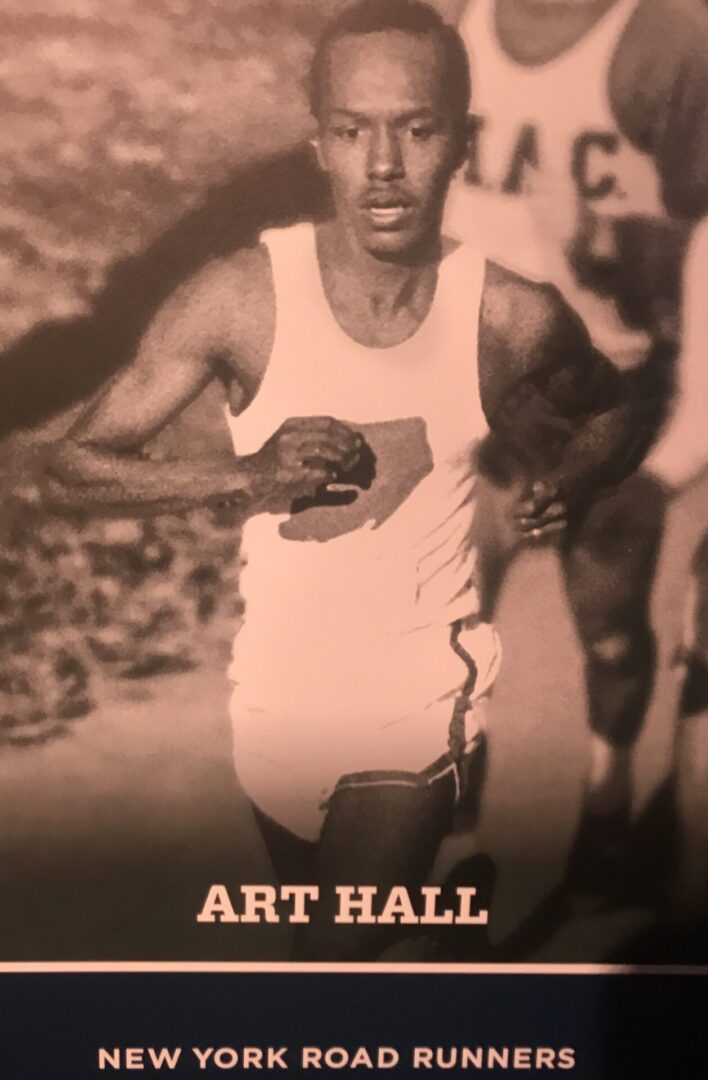
* Arthur C. “Art” Hall 111 (1947 - 2011) who I witnessed evolve from being the new kid on the block in 1964 to becoming an ambassador of the sport.
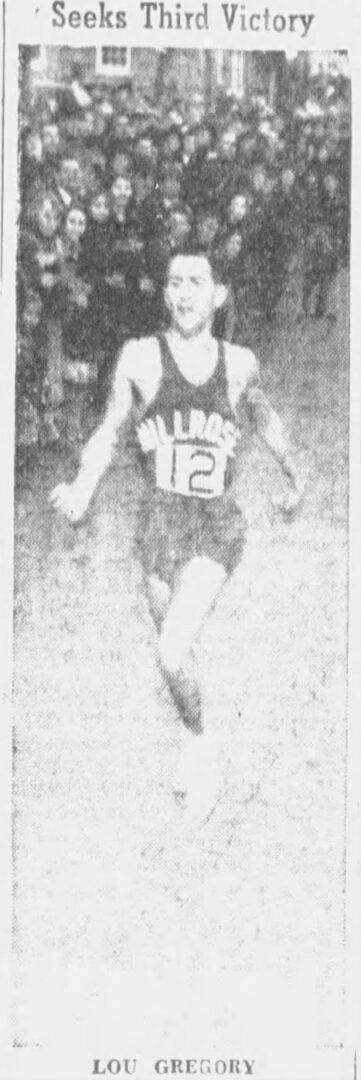
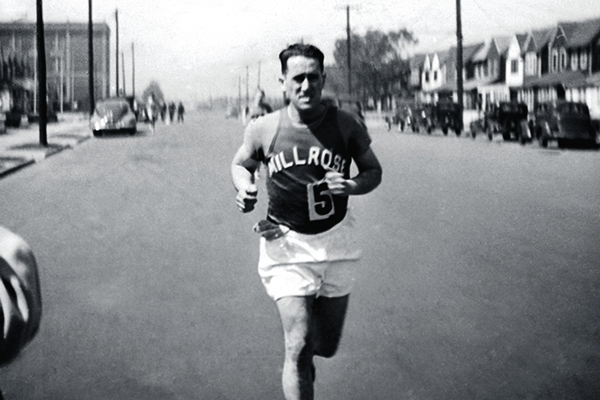
*The great Millrose Athletic Association teams of the 1930s and 1940s.
*Joseph “Joe” Kleinerman’s (1912 - 2003) and his pivotal role in NYRR History.
* Louis “Lou” White (1908 – 1990) a true Renaissance Sportsman.
The Theodore Corbitt Institute (TCI) continues to preserve running history through the following ongoing projects:
Road Runners Club: New York Association – Oral History Project
Part 1: New York Pioneer Club (NYPC) (1936-1976)
Part 2: The Bronx Years (1958 – 1972)
Part 3: Road Runners Club of America (RRCA) Chapters across the United States (1958 – 1980)
Part 4: The Early Central Park Years (1973 – 1990)
Twenty-one interviews have been completed so far and are posted on our YouTube channel. Here’s the link: https://www.youtube.com/@TedCorbittInstitute
Starting Line 1928 – A Women’s Running Oral History Project documenting the stories of the pioneers of women’s distance running in their own voices.
The sixty-seven podcasts can be found here: https://www.startingline1928.com/
Gary Corbitt
Archivist: Theodore Corbitt Institute
July 23, 2026
NYRR:
The largest running organization in the world with over 80,000 Members.
NYPC:
A racially integrated Black athletic team during the Jim Crow Era of the 1940s and 1950.
Track & Field Athletes
Long Distance Road Runners
Long Distance Race Walkers
Remembering Arthur C. “Art” Hall 111 (1947 – 2011)
Originally, I was going to dedicate this entire project to Art Hall, but instead it will be a tribute to all first-generation Road Runner Club: New York Association members who helped invent the sport between 1958 – 1972. The sport and New York Road Runners today stand on the shoulders of the collective volunteer work of these athletes and officials.
In 1964 Art was the new kid on the New York road running scene having just graduated from Hughes High School. I saw him race often in high school and witnessed his first significant road race in 1964 at the Senior National 25K Championship held at the World’s Fair in New York. It was an extremely hot day. I was age 13. All the top runners and teams on the east coast and middle Atlantic regions were present. Art was the 4th man on the New York Pioneer Club team that was comprised of three Olympians (Ted Corbitt 7th, Gordon McKenzie 10th, Abe Fornes 14th; Art Hall and Al Williams were 30th & 33rd respectively). Art was the difference maker in helping the NYPC to a second-place team finish behind Gaelic Athletic Club and ahead of Boston Athletic Association.
Art was a true Running Ambassador always giving back to the sport as a role model athlete, mentor, and coach. He was a champion front runner often pushing the pace, founder of Staten Island’s North Shore Track Club, served on the NYRR Board of Directors, and co-created the Urban Running Program, a groundbreaking youth fitness program that started in the 1980s. Art made this statement at age 37: “I like to instill in youngsters a deep abiding belief in themselves and a commitment to a sound mind and health body.”
These three quotes epitomize the spirit of Art Hall.
“We felt a bond from these races much like two boxers who give it their all and respected each other for it. Art loved running and the running world.”
—Dr. Norb Sander, NYRR board of directors’ member and executive director, The Armory Foundation
"Art Hall was my first coach who was also a great teacher and friend. Aside from his unbelievable running, he was the most inclusive, encouraging friendly runner I knew. Art always had time for you, whether you looked to run 5 hours or sub 3 hours for the marathon! His constant encouragement made everyone feel special. One of his concepts, the Urban Running Program, has influenced thousands of kids throughout NYC over 30 years.”
—Jeff Benjamin, former president, Staten Island Athletic Club (1989-1996)
"As a young man on Staten Island in the 1970s, Art Hall was my idol. The trim black man who wore sweats during all of his runs seemed to be all over the Staten Island doing his training. His best attribute was his ability to motivate and tell stories. He would describe a 5K race in 30 minutes and explain how and why he ran the way he did. Young athletes like me would sit there and listen to every word.
"The first time I beat Art in a race was Thanksgiving in 1978. It was an awakening that I was developing into a runner that Art and I would be proud of.
—Bob Orazem, North Shore Track Club
Here’s a fine article “We All Loved Art” by Gail Kislevitz.
https://www.nyrr.org/run/photos-and-stories/2021/art-hall
Gary Corbitt
Archivist: Theodore Corbitt Institute
August 8, 2026
Notes:
Long Distance Log (Volume 9) #10 October 1964 P.3-4
New York Running News – 1984 “Masters if The Game” by Jim Gluckson
The Champion Millrose Athletic Association Runners
Part 1: 1930s & Early 1940s
Millrose AA was instrumental in the invention and evolution of today’s sport of long-distance road running. It was both the NYPC and Millrose that laid the foundation for the success enjoyed today by NYRR. This fact will be documented throughout this timeline by Dr. Pam Chenkin and myself.
The Wanamaker Millrose Story includes a championship baseball team and a famous indoor track meet that started in 1908. Millrose has a great history of producing Olympians and national champions. Here we’ll highlight the runners who were teammates and competitors to Joseph Kleinerman (1912-2003).
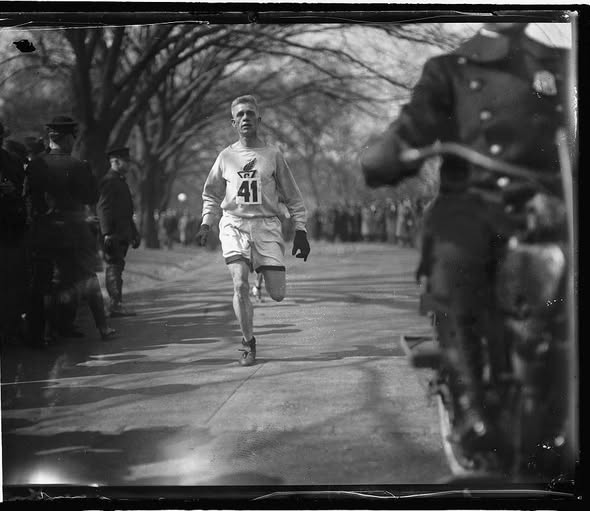
Before Joe Kleinerman there was Albert Richard “Whitey” Michelsen (1893 – 1964)
World Record holder in the marathon set in 1925 2:29:01. He was the first runner to break 2:30 in the marathon.
A two-time Olympic marathoner in 1928 Amsterdam and 1932 Los Angeles.
Running Historian Andy Milroy said the following about his world record time:
“Whitey Michelsen's mark was set on a short course. When developing the Annual World Marathon Rankings on the ARRS website we were able to make detailed comparisons of a runner's marathon performances over five years, both before and after the performance we were checking. We did that for the top ten runners in each race. If most of those runners ran faster in that particular race than in other races, then the course was likely to be short.
Ken Young used a version of this technique to discover potentially short courses in contemporary data which were then checked by course measurers. It worked. Distance runners are measuring devices.”
Eino Pentti (1906-1993)
Two-time Olympic 10,000 meters runner in 1932 and 1936 Germany in the 10,000 meters.
National Champion at 6 miles in 1934, 1937 and 1938, 25K 1934 and 15K in 1940.
He held the 10,000-meter American record at 30:54.6 in 1938.
Louis “Doc” Gegory (1902 – 1989)
1932 Olympian at 10,000 meters.
A winner of 16 national championships across various distances.
He placed 2nd and 4th respectively at the Boston Marathon in 1942 (2:28:03) and 1946 (2:37:23).
Lou placed 2nd at Yonkers in 1940 behind Canadian Gerald Cote.
He was a three time winner of the historic Berwick Marathon (9+miles) in 1931, 1939, and 1941.
Inducted into the RRCA Distance Running Hall of Fame in 1972.
Pat Dengis (1902 – 1939)
His life was shortened due to a plane crash.
He captured three national championships at the marathon in 1935, 1938, and 1939.
He placed second at Boston in both 1935 and 1938.
Pat held the leading marathon time in the world in 1938 with a clocking of 2:30:26.6.
Notes:
RRCA Hall of Fame - 1972
Boston Marathon by Tom Derderian
The Wanamaker Millrose Story 1908 – 1967
Berwick Enterprise - 1941
Gary Corbitt
Archivist: Theodore Corbitt Institute
https://tedcorbitt.com/definitive-history-timeline/
August 11, 2026
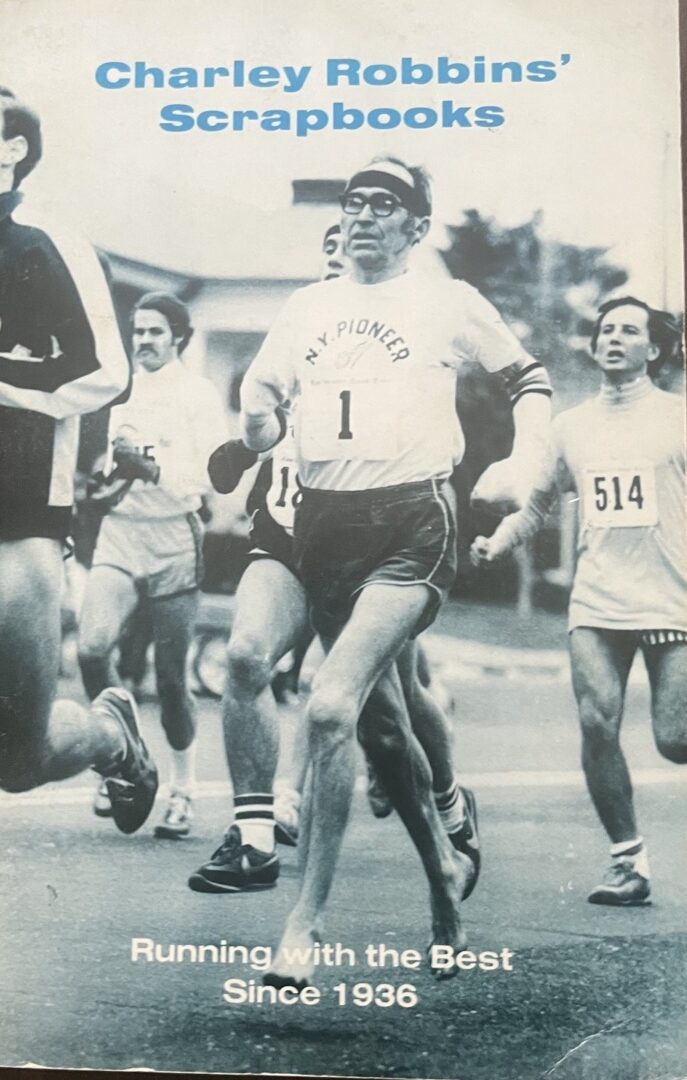
Remembering Charles “Doc” Charley Robbins Jr. (1921 – 2011)
I never had the opportunity to meet Doc Robbins. The stories I’ve heard about this great and proud New York Pioneer Club champion are many. All running historians will forever be thankful for his publishing the Charley Robbins Scrapbook. The book fully documents his racing career year by year throughout the 1940s and 1950s in New England and New York. A true goldmine for research.
Here’s why he joined the NYPC:
“It most closely was founded on what I thought running should be. It was a shoestring club with no clubhouse, and it ran on the energy and vision of Joe Yancey and Horace Wall. It was in Harlem, a Black area, but took anyone who wanted to run. It has always struck me that the government didn’t give Joe and Horace Wall a subsidy for the NYPC. It was such a setup to help the Harlem young people. The Pioneer Club idea could have been a national organization and helped many with a little support.”
Charley Robbins won 11 national championships from 20K to the marathon. Ted Corbitt felt that he had the heart lung capacity to be the first marathoner in the world to break the 2:20 barrier if he had trained harder.
He completed the Manchester Thanksgiving Road Race for 50 consecutive years and was inducted into the 4th RRCA Hall of Fame Class in 1974.
Here’s some of Ted Corbitt’s remembrance of his teammate:
From a 2006 Amby Burfoot Blog Post.
S U N DAY, N OV E M B E R 1 2 , 200 6
Charlie Robbins Remembered By Ted Corbitt
The great American marathoner, Olympian, ultramarathoner, Road Runners Club organizer and course-certification pioneer (and that's only a beginning, but whew!) Ted Corbitt traveled to Middletown by several buses in late August to attend a remembrance get-together for 'Doc" Charlie Robbins, who died at age 85 last August 10. With him, Corbitt carried 5 typed pages of his memories of Robbins. He gave these to Robbins daughter, Barrie, who sent me a copy. Here with, some excerpts:
*** Had there been no World War Il, Dr. Robbins, a talented national marathon champ, would have made an Olympic Team. With training and remaining injury free, he might have made two or three Olympic Teams.
*** Charlie did not exploit his gifted talents fully, but he did cop 1 1
National Championships>> 5 x 20K; 2 x 25K; 2 x 30K; and 2 Marathon Championships. He was inducted into the Road Runners Hall of Fame in 1974.
*** He was reported to be a light trainer, meaning that he did not train hard and long enough to develop his talents fully. He had the potential to become the first American marathoner to break 2:20, but he would have had to train his body to hold a sub-5:20-pace past the 20-mile mark.
*** An early newsletter of the New York Road Runners Club recorded Doc Robbins as the first person to advocate co-ed road running.
*** Some time in the 1950s, Doc Robbins and two friends had just started a workout from a park near Yankee Stadium, laughing and gabbing as they ran, when a cement truck driver pulled up next to them and yelled, "Why don't you bums go get a job?" The runners were Herb Benario, a Ph.D. college professor; Aldo Scandurra, an already well-to-do electrical engineer working on his Ph.D. dissertation; and Robbins, an M.D.
*** While most runners do some sort of warmup, Doc Robbins tended not to bother. He preferred to just stand around talking.
*** At one National Championship 20-K, Doc Robbins apparently decided to have some fun, so he started the race from a crouch start like that used by sprinters. Robbins won the race, probably the only National road race championship for a crouch-start runner.
*** Charlie had one quality that's rare among the great champions: He enjoyed running even when there was no hope that he could win. When Charlie was not in good shape, he often raced anyway, purely for the run of it.
http://ambyburfoot.blogspot.com/
11/21/2006
Charley Robbins Scrapbook Forward by Ted Corbitt:
https://drive.google.com/file/d/1AQRCxmaz5lFUxm5V9ILmHC6u8-V4WJTJ/view?usp=sharing
A Brief Chat with Charlie Robbins by Amby Burfoot:
Charlie "Doc" Robbins: 1921 - 2006, RIP
https://drive.google.com/file/d/1-2tiYbDQcEDcXqjZUZ4RU503Hr7USsgL/view?usp=sharing
Gary Corbitt
Archivist: Theodore Corbitt Institute
August 17, 2026
Notes:
Charley Robbins Scrapbook
Ted Corbitt Remembering Charlie Robbins August 28, 2006
Runners World Daily – December 1, 1997
Joseph George “Joe” Kleinerman (1912 – 2003)
In its early decades Joe was “The Heart & Soul” of New York Road Runners. The Theodore Corbitt Institute (TCI) is currently conducting interviews of NYRR first generation pioneers. The interviews with David Littlehales and Glenn McCarthy illustrate the family atmosphere the club enjoyed in the mid-1960s. These nervous high school runners instantly were welcomed as Joe registered them for races and would call out their names for everyone to hear at the Macombs Dam Park locker room in the Bronx and Yankee Stadium. The typical number of runners during this era of weekly road races was 30-50. During the 1960s I heard Joe barking out each of these running pioneer names – Assa, Bessel, Best, Bowes, Brewington, Burns, Cabrera, Chiappetta, Chodes, Cirulnick, Coyne, Cucchiara, Doc Sheehan Flamer, Fornes, Garlepp, Geislers, Genden, Givner, Iglesias, Kelly, Kern, Kirby, Kochman, Kopil, Kotteakos, Kurt, Lombardi, Malkasian, McArdle, McCarroll, McCarthy, McDonagh, McEleney, McKenize, MacNicholl, Medaglia, Mooney, Moore, Moses, Muhrcke, Nolan. O’ Connell, Pataky, Reif, Richey, Rosales, Rubin, Sander, Scandurra, Steinfeld, Swan, Vogel, Weiss, Welsh, Williams, Winrow and Zayas.
Amby Burfoot’s oral history interview gives this quintessential look at Joe. Amby recalled as a Connecticut high schooler he wrote NYRR about upcoming summer races. Joe responded with a signed welcoming message to Amby with the race schedule. TCI has conducted twenty-one interviews so far. They can be found here: https://www.youtube.com/@TedCorbittInstitute
Joe was a big proponent of women entering the sport.
Nina Kuscsik said this about Joe:
“Joe always reminded me of my father, the way he would talk to you with a sort of frown on his face. Not because he was angry but because he was concerned or interested. I remember running the Cherry Tree Marathon in 1970, when Joe was the coach of Millrose. Back then they didn’t give awards to women-most award ceremonies were held in the men’s locker room. But Millrose gave me their team trophy, and I’m sure it was engineered by Joe.”
Kathrine Switzer said this about Joe:
“When I first met Joe, I knew I was supposed to be scared of him because he kind of growled and barked at people. Being a women runner better mean you were for real, or he’d really bark at you. By 1974 I’d become a good runner, and it was Joe who was the most excited. Having his approval meant everything. He knew how hard a person had to work to improve, and he was the first out there to congratulate you.”
Ted Corbitt said this about Joe:
“Joe has spent more time promoting road races than any other person in world history.”
Unfortunately, Joe isn’t in the NYRR Hall of Fame. TCI plans to establish a yet to be named “Wall of Fame” to fully recognize this era of running history.
Here’s Ted Corbitt’s remembrance of Joe Kleinerman.
https://drive.google.com/file/d/1WHvvAgktXCS73Vo1xKEZPGl6nYkLMz0B/view?usp=sharing
Learn more about Joe Kleinerman with these articles:
The Many Gifts of Joe Kleinerman by Gordon Bakoulis
https://www.nyrr.org/run/photos-and-stories/2022/who-was-joe-kleinerman
Joe Kleinerman by Paul Fetscher
https://drive.google.com/file/d/1n0oMchF8UuAuMQ93ByDs23CsaUFUcHMy/view?usp=sharing
Honoring Joe Kleinerman, NYRR founder, competitor, coach and friend of running by Alan Steinfeld
https://drive.google.com/file/d/1HoRld7UUm5PTPqHvbp27IWdTZnLoDIMh/view?usp=sharing
2 Birthdays – and Joe is Celebrating both of them by Eddie Coyle
For the researchers reading this please note there are a few errors in this article, but it’s also filled with good information.
https://drive.google.com/file/d/17p95LZqbIHnJIOaDV-afb8JMUGjYzjNY/view?usp=sharing
Gary Corbitt
Archivist: Theodore Corbitt Institute
August 29, 2026
Notes:
Newsday
New York Runner 2002 – Jan/Feb
Runners World
Ted Corbitt Archives
Remembering Louis “Lou” White (1908 – 1990) – A Renaissance Sportsman
United States track coaches in the mid-20th century steered Black athletes into sprinting and away from distance running. Young Black runners would look at the starting line of a 5,000 or 10,000-meter race and internalize the idea that Black people don’t run distance.
I created the Black Running History Timeline (1880 – 1979) ( https://tedcorbitt.com/black-running-history-timeline-1880-1979/) to both dispel this myth and show that my father Ted Corbitt wasn’t the first great Black long distance running champion. In fact, my father’s New York Pioneer Club teammate Lou White served as a forerunner and inspiration to him. Lou achieved the highest finish (third place) ever for a Black American at the national championship Yonkers Marathon in 1946, 1949 and Boston Marathon in 1949. Jacob Fredericks fine dissertation “Great Speed & Great Stamina: A History of Black American Long Distance Road Runners, 1942-1969” points out that Lou White was the first Black American to represent the United States in the marathon in international competition. He competed in the Little Olympics held in 1949, Oslo, Norway.
In 1954, Ted Corbitt became the first Black American to win a United States Marathon Championship at the marathon. Lou White had an opportunity to achieve this milestone eight years earlier in 1946. Here’s Charley Robbins’ thoughts on that race at Yonkers.
“Cote, Kelley, Lou White and I ran together from 12 miles to 15 miles. Lou was the most fresh, but he had never done this well in a big race, so was rather awed with Cote and Kelley. Joe Yancey tried to tell him that they were dying, but he couldn’t believe it, so he dropped back. So, this Yonkers was the one Lou White missed due to being bluffed by two of the best in the business.”
The only time I’ve ever rode on a motorcycle was when Lou rode me home from Van Cortlandt Park. I also recall seeing Lou playing intense handball games at Van Cortlandt Park courts. He would have been in his mid to upper 50s. John Garlepp told me years later that he would be hustling people on the handball court. Here’s how Charley Robbins remembered this.
“Lou would innocently come up to some tough fellows playing handball and ask if he could play, too. Then of course, he would get a little tired. Then he would be asked if he ever played for money. Of course after many games he would win and the money all warmed up for the next group.”
From the seminal 1969 book the term Long Slow Distance (LSD) was coined by Joe Henderson. The book profiles these athletes (Amby Burfoot, Bob Deines, Tom Osler, Ed Winrow, and Jeff Kroot). They used this training concept of running a good number of miles at comfortable paces and less time doing high intensity track workouts.
In a 1978 letter from Aldo Scandurra to Fred Lebow where Aldo took Fred to school about the history of NYRR he said the following:
“With respect to long slow distance running, the first person to do this correctly was Lou White of the Pioneer Club. He preceded Winrow, Burfoot, and others.”
I wrote the following profile in 2014.
Lou White (1908 – 1990)
African American Great Long Distance Runner
A Renaissance Sportsman
By Gary Corbitt - 2014
“I always thought of Lou White as nature’s nobleman. He was a gentleman of the world and had many interests, of which running was only one. Lou’s lifestyle was to sweep out a bar daily just to keep some regular income, then was free to play handball for side bets, to ice skate, read, or do whatever he wished. I think he did some art work. Lou was 5’ 5’’ muscular, bespectacled, and dressed in the manner of an artist. After finishing third in the Boston Marathon one year, he spent the rest of the afternoon playing handball.” Charlie Robbins, MD
Lou White studied journalism at New York University until he dropped out because of the depression. Lou worked at odd jobs, favoring a simple life. Among other things, he washed windows, delivered telephone books, and worked as a handyman. He worked as Recreation Director for the Department of Parks, starting in 1950. He next worked at Lincoln Hospital first in the Emergency Room and then in the records department. Lou retired in 1975. A serious jazz fan, Lou also found work annually at the Newport Jazz Festival.
From 1941 to 1957, White competed in the Metropolitan one-mile speed skating championships. In 1946 he was Metropolitan One Mile Speed Skating Champion. He excelled in such diversified sports as handball, soccer, swimming and ice skating. His entire life he competed in handball and racquetball tournaments, always placing first or second in the district. Queried about paddle tennis, he laughs, “it took tennis star Bobby Riggs to eliminate me in the Metropolitan tournament.” In 1949, he took third prize in a national photo contest with impressive shots of his Vermont travels. He also published some fiction and nonfiction articles.
Lou did his first competitive running for the New York Pioneer Club (NYPC) from 1945 – 1948. He moved to Boston and represented the Boston Athletic Association for two years. He returned to New York City and the NYPC in 1950. Lou first victory was in 1945 in a 5-mile race at Poughkeepsie. He captured the Metropolitan Marathon crown in 1946 at Yonkers. He won the Jr. National 25K title in 1947. Between 1948 – 1951, Lou won New England titles at 15K (twice) and 20K. He was also Metropolitan 25K Champion and a member of the 1950 NYPC national marathon team championship.
In 1949, Lou finished third in the Boston Marathon in 2:36:48. He may have been the fastest black marathoner in history up to that time. He followed up his Boston race with a third-place finish also at the national championship race at Yonkers. After winning the National AAU 15K Championship in 1950 and 1951, he was named to the U.S. All American Track & Field Team. Lou was a two time National Champion at 10 miles in 1950 and 1951. His time in 1951 was 49:51. He was inducted into the Road Runners Club of America Hall of Fame in 1984. Lou was a charter member of the New York Road Runners Club in 1958.
During the 1970s and 1980s Lou White manually score road races in the New York City area. He would be joined by his contemporary competitors Harry Murphy and Joe Kleinerman.
In 1988 Lou White told New York Running News: “You should pursue your dreams no matter what obstacles you may encounter. Talent and hard work are necessary for success.”
John Chodes wrote a profile on Lou for the Winter 1962 issue of Road Runners Club: New York Association’s Newsletter:
https://drive.google.com/file/d/1E1VikDo58nXQWAU5-YYKcu8yZ1LsG85r/view?usp=sharing
Here’s a sampling of some of Lou White’s road races between 1948 – 1951:
https://drive.google.com/file/d/1hmXJwKebu7fdF56WQbMeKu_iMlJmceGQ/view?usp=sharing
Lou was part of two New York Pioneer Club marathon team titles.
1950 National Champions: Lou White, Harry Murphy, and John Sterner.
1952 Boston Marathon Champions: Ted Corbitt, Sevki Koru, and Lou White.
Gary Corbitt
Archivist: Theodore Corbitt Institute
Follow other History Timeline Profiles Here:
https://tedcorbitt.com/definitive-history-timeline/
September 5, 2026
Notes:
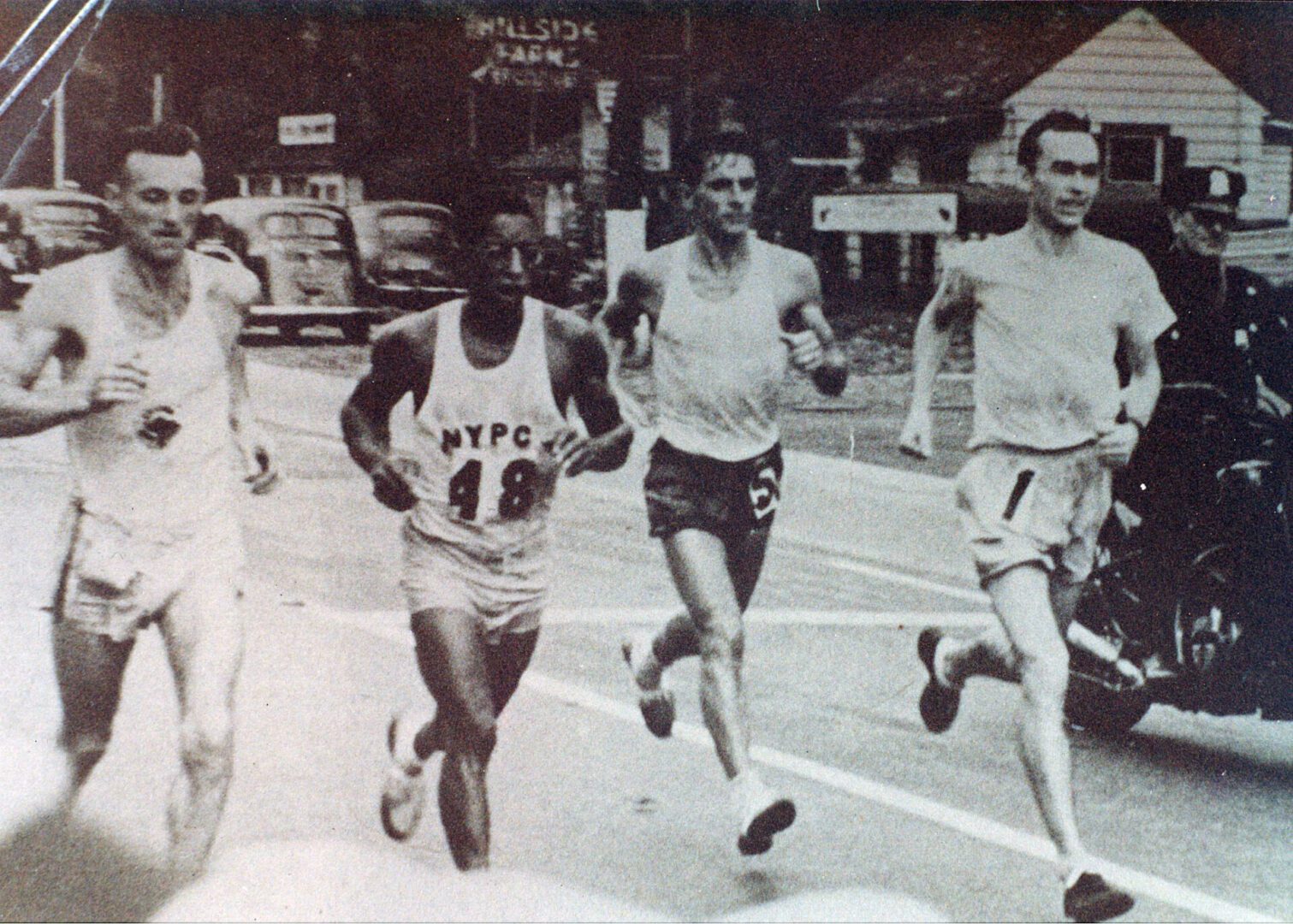
1946 Yonkers Marathon Photo: L to R: John A. Kelley, Lou White, Gerald Cote, Charley Robbins
Charley Robbins Scrapbook
Ted Corbitt Archives
Runners World – Long Slow Distance, April 1984
Aldo Scandurra Letter to Fred Lebow, 1978
Road Runners Club: New York Association Newsletter, Winter-1962
Track & Field News
Jacob Fredericks 2022 Dissertation
Remembering Harry Murphy (1913 – 1993)
A Truly Unsung Hero of New York Road Running History
A true founder of NYRR is Harry Murphy who was there at the beginning. In the club’s first year 1958, the AAU made things difficult for the newly formed club. Prompting a pivotal meeting where a vote to continue or disband took place. Harry was part of this vote and served on the club’s first executive committee as treasurer.
I remember Harry most as the person who invited my father, Ted Corbitt, to join the New York Pioneer Club in 1947. Years later, when my father proposed turning the New York Marathon into a five-borough race, he first asked Harry to recommend the route.
I’m always heartened by the love and respect Harry’s former athletes still have for him. Here are three examples:
In January 1993 we lost our coach, mentor, and friend. In his quiet, always encouraging way, Harry launched many running careers. He single-handedly turned couch potatoes into sub-4-hour marathoners. He started running as a freshman at Erasmus High School and continued to run into his seventies, completing 42 Yonkers Marathon.
As a coach he would meet any eager runner; any time, any place for a workout. His favorite coaches’ adage was “make your own way.” If you had a bad day, it was “money in the bank.” Harry co-founded the Prospect Park Track Club in 1970 with Jack Stetch and Bob Muller.
Regina Cahill – Prospect Park Track Club Past President
Because of the work ethic, determination, and resilience he instilled into my character, I went from chasing my dogs on the grass fields of Prospect Park to becoming a multiple NYC Borough, City, State, and National high school champion, a full-scholarship athlete at Villanova University, and ultimately, a World Championship competitor. My fondest, most sacred memories remain the quiet moments after grueling sessions, sitting together on a park bench, freezing and exhausted, sipping hot minestrone soup he would buy from the deli across the road while he taught me about life and how to be a student of our sport. Every single day as a teacher and coach, whether leading a high school program or standing on the world stage as the Head Relay Coach of the National U20 program and the Head of the Australian Senior Women’s Relay Team, I am simply a reflection of Harry’s profound belief in me. He paved the way for my education, my career, and my purpose, and I am humbled each day to be able to pass the incredible light of resilience and open mindedness he gave me onto the next generation of athletes.
Thank you for believing in me, Harry. Your light runs on in everyone I guide. Rest in eternal peace.
Cathalina Staye-Walsh – Athletic Development Program Coordinator – Sydney, Australia
I think the history books should simply say: That, in Prospect Park, there is not just a plaque or a bench in honor of Harry but a whole wall! That is how much Harry means to New York running. He always had time for you no matter how fast you were. I doubt that I would have qualified for Boston in 1978 if it weren't for Harry's coaching and encouragement.
This past June I celebrated my 50th year as member of Prospect Park Track Club and I am, happy to say, still running. There is no question in my mind that I would not be here today running if Harry hadn't been there for me those many years ago. He was a kind and beautiful person - one of the nicest people I have ever known.
Pete Canning – Prospect Park Track Club
Ted Corbitt said the following:
“Harry Murphy was a long distance runner who served in the US Army during World War 11and who worked for the Post Office. Harry ran for several different running clubs. He helped to found the NY Road Runners Club and helped it survive with much volunteer work in its early years. He made the first rough survey of the distance from the toll booth at the Verrazano Bridge to Columbus Circle and to the United Nations confirming that a marathon distance was possible to those sites.
Aldo Scandurra in a 1978 letter schooling Fred Lebow on running history said the following:
“It was Harry Murphy that brought about water and refreshment stations in competition. He taught me and I made it a rule.”
Charley Robbins Scrapbook cites September 12, 1948, as Harry Murphy Day. It was National AAU Marathon Championship held in Queens, New York.
Here’s Harry’s Results:
3rd Place National AAU Championship
1st Place Met AAU Championship
1st Queens Resident
2nd National AAU Team – NYPC
2nd Met AAU Team – NYPC
Top 4 Finishers:
John A. Kelley – 2:48:32
Charles Robbins – 2:59:19
Harry Murphy – 3:01:05
Gerard Cote – 3:03:58
Road Runner Club: New York Association legends Harry Murphy and Kurt Steiner died weeks apart in January and February 1993 respectively.
Musing on Harry by Regina Cahill, PPTC Past President with 49 years of membership.
https://docs.google.com/document/d/1VfGdaw3b_zKcoh0jNoEQdzYwOimTHRbI/edit?usp=sharing&ouid=116658119848466024296&rtpof=true&sd=true
Doug O’ Brien Remembers Harry Murphy.
https://docs.google.com/document/d/14z5RcRbj4PTxbOIoiNoNso2aYoSdiZjC/edit?usp=sharing&ouid=116658119848466024296&rtpof=true&sd=true
Gary Corbitt
Archivist: Theodore Corbitt Institute
Follow other History Timeline Profiles Here:
https://tedcorbitt.com/definitive-history-timeline/
September 24, 2026
Notes:
Ted Corbitt Archives
Aldo Scandurra 1978 Letter to Fred Lebow
Charley Robbins Scrapbook
Index Links: